High-Level Architecture
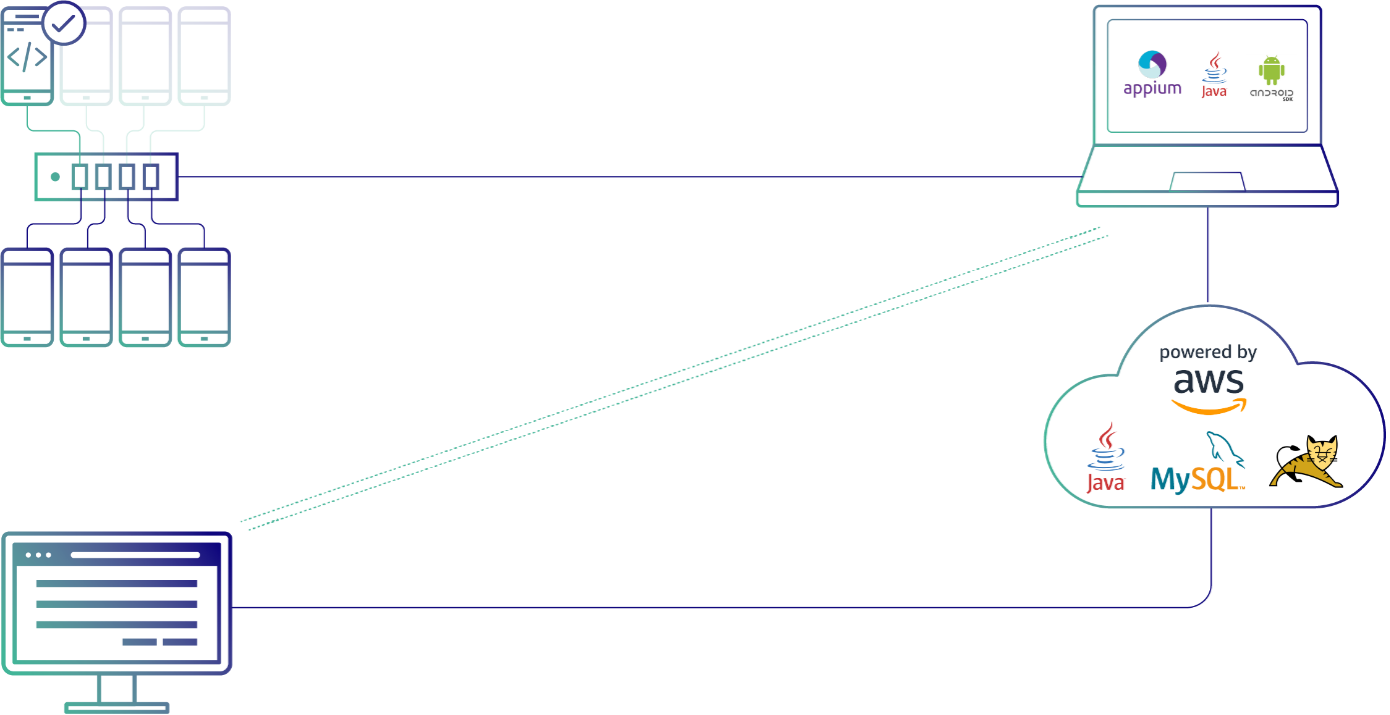
The diagram below shows how the main parts of Quad TEO work together — from the physical test devices on site to the orchestration backend running in the cloud.
How it fits together
- Test devices — Physical mobile devices (Android and iOS) are mounted on site and connected through a dedicated USB hub to the test machine. Each port maps to a device that TEO can drive automatically.
- TEO Client PC / Test Node — The on-site machine that runs the automation toolchain (Appium, Java, and the Android SDK). It receives test instructions and executes them directly on the connected devices.
- Cloud backend — The orchestration layer, powered by AWS, built on Java, MySQL, and Tomcat. It schedules test suites, stores test cases and results, and coordinates every Test Node.
- Web UI — The browser-based interface where users design test cases, build and schedule suites, monitor executions, and review reports. It talks to the cloud backend, which in turn drives the Test Nodes.
Together, these layers let you author tests in the Web UI, run them on real devices through the Test Node, and have all results collected and analyzed centrally in the cloud.